

Hallelujah!
Psalm 116:10-19, The Egyptian Hallel Psalms

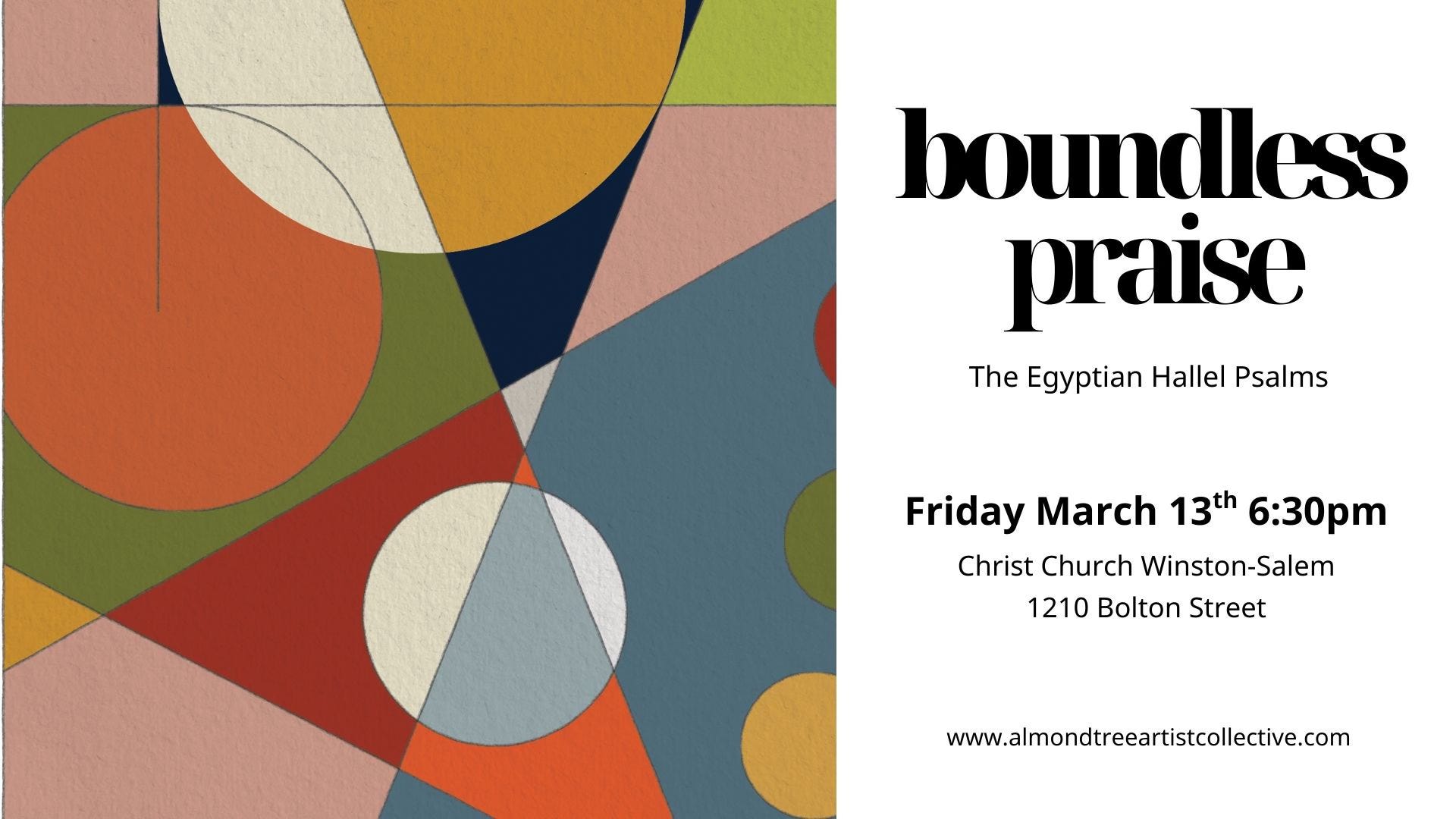
The Almond Tree Artist Collective‘s most recent exhibit is titled “Boundless Praise” and is based upon the Egyptian Hallel Psalms in the book of Psalms. The Hallel Psalms are Psalms 113-118 and were regularly sung during Passover week. When we read in Mark 14:26, “And when they had sung a hymn, they went out to the Mount of Olives,” the hymn which Jesus and his disciples sang was likely Psalm 118 the culmination of that album of songs.
I contributed a a poem and a linocut for the exhibit which find their inspiration in the second half of Psalm 116 (verses 10-19) which reads,
I believed, even when I spoke:
	“I am greatly afflicted”;
I said in my alarm,
	“All mankind are liars.”
What shall I render to the LORD
	for all his benefits to me?
I will lift up the cup of salvation
	and call on the name of the LORD,
I will pay my vows to the LORD
	in the presence of all his people.

Precious in the sight of the LORD
	is the death of his saints.
O LORD, I am your servant;
	I am your servant, the son of your maidservant.
	You have loosed my bonds.
I will offer to you the sacrifice of thanksgiving
	and call on the name of the LORD.
I will pay my vows to the LORD
	in the presence of all his people,
in the courts of the house of the LORD,
	in your midst, O Jerusalem.
Praise the LORD!
For the linocut, I focused in on verses 12 and 13 which reads:
"What shall I render to the LORD
     for all his benefits to me?
I will lift up the cup of salvation
     and call on the name of the LORD.”
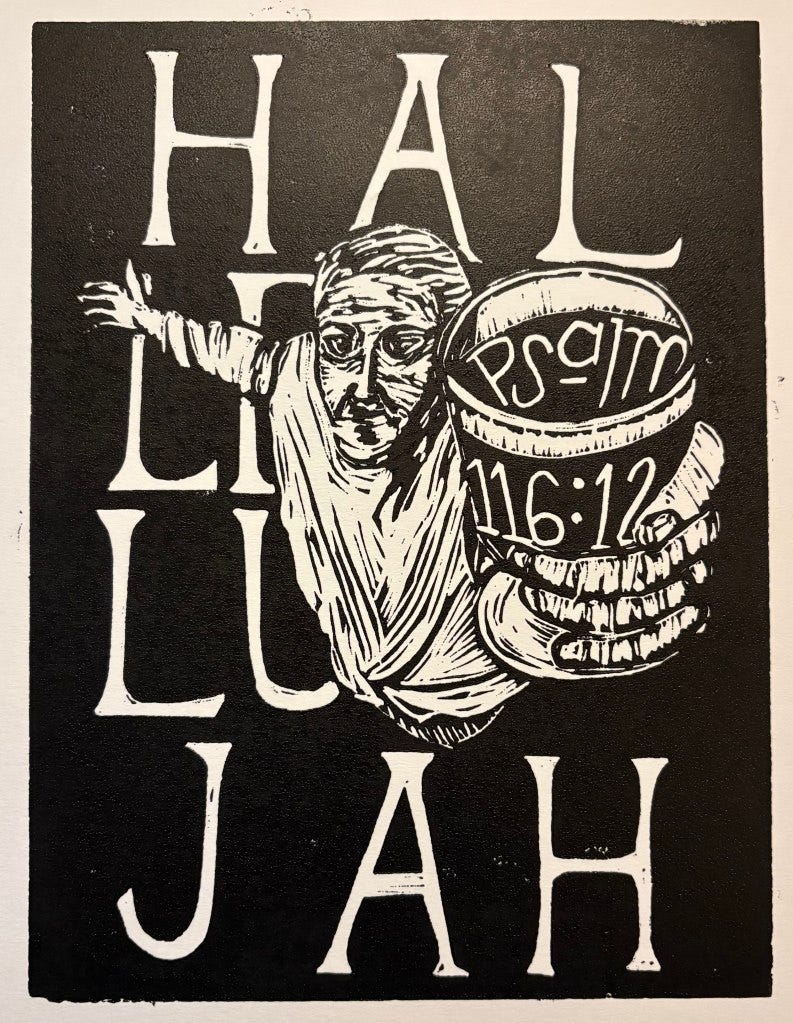
As I was considering the Psalm’s text, I came across a quote by Eugene Peterson from his book on the Psalms titled, Answering God. Peterson writes,
“All prayer, pursued far enough, becomes praise. Any prayer, no matter how desperate its origin, no matter how angry and fearful the experiences it traverses, ends up in praise. It does not always get there quickly or easily — the trip can take a lifetime — but the end is always praise.”
I read this not merely as a statement but as a promise. It is the quality of promise that differentiates the Hallel Psalms from the concluding cycle of "hallelujahs” at the end of the Psalter (Psalm 146-150). A friend pointed out that the final hallelujahs at the end of the Psalter are the hallelujahs of the arrival, but the Egyptian Hallels are the first hallelujahs of salvation — the hallelujah’s of deliverance and the joy of a new beginning…of setting out on the journey to salvation’s destination.
The gift of the hallelujahs which mark the start of the journey of salvation are a treasure and promise because they teach us that the praise we experience is just the beginning. The promise is, as Peterson says, just this: “all prayer...becomes praise.” As I sought to work those thoughts in, I wrote the following poem.
Though men lie and spin the truth,
Though I suffer at their hands,
Though I doubt that I am worth
It, beat down by their demands,
I will believe the promise
That You promised at the start,
To sing Your Hallelujahs
And sing with all my heart.

From this bed in which I lie
Though my final resting place,
Will I remember mercy—
Th’ sunshine smile of Your face?
Will my end be Hallelujahs?
Will I count all loss as gain?
Will my last gasp be the first
Of a joy-filled praise refrain?

Yea, “Hallelu! Hallelujah!”
I will raise my cup to Thee.
My last word, “Hallelujah!”
You’ve promised. I believe
You’ll turn the curse to blessing,
Rumors whispered in the breeze
Shall become Hallelujahs
For all eternity

You may listen to me read the poem via the player below.
Lastly, the exhibit is currently hanging at Grace Kernersville, and you are welcome to drop in and see the artwork.
Randy, I loved the poem, the Linocut and the inspiration! Thanks so much for sharing this!!
Thank you for this blessing and good reminder To be praise- full
I think you would appreciate A devotion on YouTube by Tim Keller from during covid called 'It all ends in praise'